Category Archives: Articles

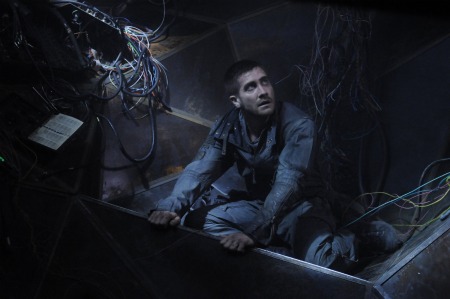
Source Code’s Ending: Bitter Pill?

MAJOR SPOILERS, SEE FILM FIRST

At the end of the film, Colter Stevens has been transported to the train, where he finally averts the explosion and then stays in the body of Sean Fentress.  It appears this is possible because he isn’t killed as Sean, so he isn’t snapped back to his body.  If he had failed, he would be dead for good since Goodwin pulls the plug on his body.

But what about the real Sean Fentress?  Since the Source Code machine is thought to just tap into the memory of someone already dead, there’s not a lot of moral consideration for Fentress considering the mission (which is also Stevens’ situation).  But since Sean Fentress doesn’t die on the train due to Stevens’ intervention, what happens to his consciousness? Continue reading

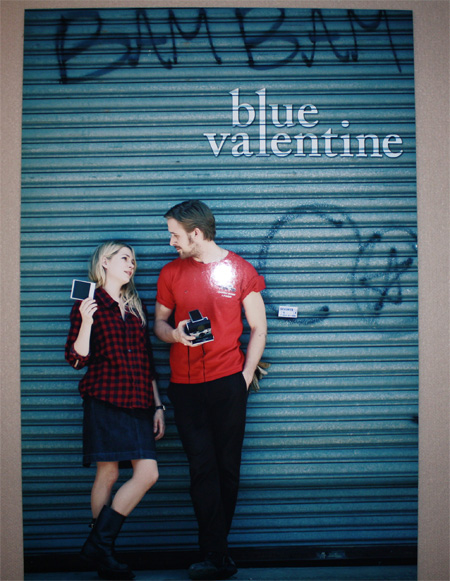
Blue Valentine tinged with misogyny?

The initial brouhaha surrounding Blue Valentine‘s rating by the MPAA has receded to the background–the filmmakers won their appeal for an R rating rather than an NC-17. The film, now circulating in limited release, is being met by strong critical praise.  Upon seeing the film though I wonder if it is unintentionally misogynistic? Continue reading

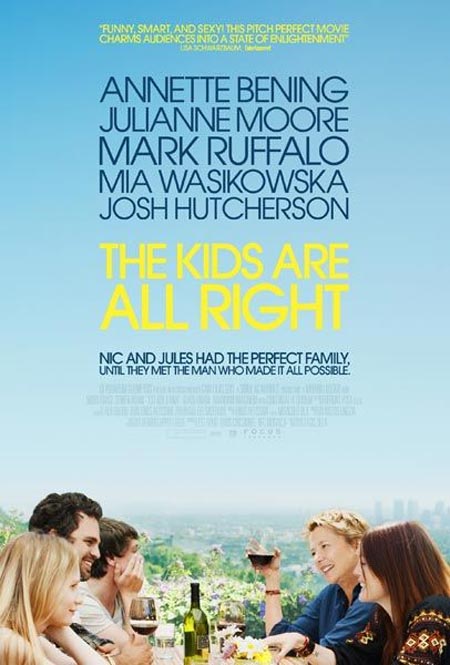
This Kids Are Alright hates your dad

Earlier this year, The Kids Are Alright was receiving all sorts of attention for its portrayal of a lesbian married couple with two children (each had one child) from the same sperm donor.  It looks like a quirky family drama/comedy (Little Miss Sunshine), but fathers aren’t included in that dynamic. This film wouldn’t piss on fathers if they were on fire – it just pisses on them, period. Continue reading

Music Video Renaissance? Kanye West’s Runaway

In the last year we have had three major music video events, with artists using the medium to launch videos as short films with a pace more lyrical than the usual heart attack-inducing editing style of music videos.  I commented on Lady Gaga and M.I.A.’s videos earlier this year, and now Kanye West has grabbed headlines with his 34-minute museum installation “Runaway.” Continue reading

Too Much Info? Trailers, Film Critics, and Twists

During the lead up to Inception‘s release this summer, the question of what counts as spoilers became a hot topic.  So how much should filmmakers share with prospective audiences without ruining the filmgoing experience? Continue reading

Why Christians Should Love “Pulp Fiction”

Much to my dismay, there are people who don’t like Quentin Tarantino’s masterpiece Pulp Fiction.   Among cinema fans you’d be harder pressed to find such sentiments, but out in the wider world such antipathy is surprisingly common.

When one of my undergrad classes watched the film, about half the class didn’t like it.  The most oft-repeated complaints: the copious amounts of swearing and violence.  I don’t know the religious affiliations of my disappointed classmates, but several people I’ve been speaking to recently, specifically Christians, have commented along similar lines.  The thing that is so mystifying to me is why they would hate a film with such strong Christian themes. Continue reading

Coming of Age: Vampires, Altar Boys, and Bob Dylan

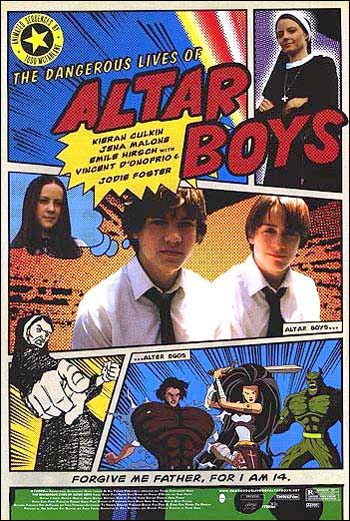
It just so happened today that I watched three coming of age stories: Let the Right One In, The Dangerous Lives of Altar Boys, and Kisses.  The films made me curious–what elements make a coming of age story?

One of the most common elements is the discovery of sexuality, which is, most of the time, depicted from the male perspective.  Oskar from Let the Right One In is in ambiguous territory with his vampire girlfriend Eli; Francis Doyle from Altar Boys fawns over Margie Flynn from on hormonal high; and Dylan in Kisses is too poor to offer anything  but a smooch for his dear Kylie.

On a related note, the ways in which girls are handled in each of these films (and other coming of age films), tend to follow some worn paths.  Margie Flynn does not receive great development, just like Wendy Peffercorn from The Sandlot (is it sad or funny I didn’t have to look up her name?). Both are little more than breasted idols to the males who have just discovered the opposite sex. Continue reading

Vampire Rumble: Let the Right One In vs Let Me In

As soon as a re-make of Let the Right One In was announced, film fans around the world let out a collective internet groan.  It’s not as if this sentiment is without merit considering the crop of 80’s horror classics that are in the works of being re-made (Fright Night, The Monster Squad), as well as the way foreign films are treated by the Hollywood re-make machine (Eddie Izzard’s commentary on re-makes seem apt [begins at the 1:03 mark].  So just how did Let Me In, the U.S. re-make of Let the Right One In, compare to the original?

Note: to avoid redundancies, let me clarify that Oskar and Eli are the boy and girl from Let the Right One In and Owen and Abby are the boy and girl from Let Me In.  Also, this post contains major spoilers for both films.

My wife pointed out that there is a difference between re-making a story and re-telling a story, as we’re always re-telling similar tales with different window dressings.  Michael Haneke’s Funny Games is a clear example of a re-make: it was first made in 1997  (Austria) and re-made, shot-for-shot, by Haneke in 2007 (U.S.).  Alternatively, something like John Carpenter’s The Thing is a re-telling of The Thing From Another World, which itself was based on the short story Who Goes There? by John W. Campbell.  Let Me In is an example of the latter re-telling, not a mere re-make.  Continue reading

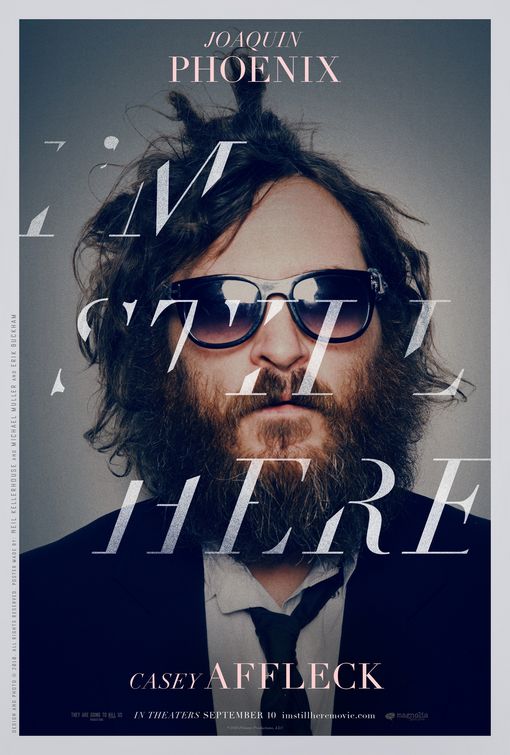
Reality, Celebrity Culture, and Inner Light in “I’m Still Here”

If you are here to read a strict review of the “Joaquin Phoenix documentary” you’ll have to go somewhere else.  The film is operating on levels reminiscent of  The Brothers Bloom because you have no idea how to differentiate between reality and performance, and are left bereft of any concrete narrative to critique.

However, if you’re here searching for thoughts about the film, step right into my office.

My initial impression was that Phoenix was proclaiming his self-importance with the title I’m Still Here, a defiant cry to some crowd that, “You can’t hold me!  I’m still here (bitches)!”  This was supplanted by an interpretation more along lines of, “Uh…why are you talking about me like that?  I’m still here.”  At the film’s heart are the ways Phoenix sets himself up for the type of criticism he receives, and how much is fueled by celebrity culture.

First and foremost, Phoenix appears to have serious issues.  I mean this not at all in a judgmental fashion, just as an interpretation of what appears on-screen.  Phoenix performs a giddy jig at the prospect of a line of coke and two prostitutes; the way he speaks suggests one too many shots of rum; and the way he reacts to other people, in word and deed, does not suggest a sound mind.  Silence follows him at the film’s end, but the rest of the time we see him as a crazed hobo crying, yelling, and consuming various substances. Continue reading

Answer to the ending of “Inception”

SPOILER ALERT!

A good chunk of us who have just seen Inception have started debating over whether Leonardo DiCaprio’s character Cobb is still stuck in the dream world.  The film’s final shot is his totem spinning on the table and before we see if it topples (a sign of being in the real world), it cuts to black.

Throughout the film we regularly see flashes of Cobb’s children as he remembers them right before he goes on the run.  His young daughter appears in a light red dress and his son in some plaid shirt.  Now, if we are to apply the A Beautiful Mind theorem, we might be able to deduce whether Cobb is awake or dreaming.

Continue reading