Tag Archives: Cinema

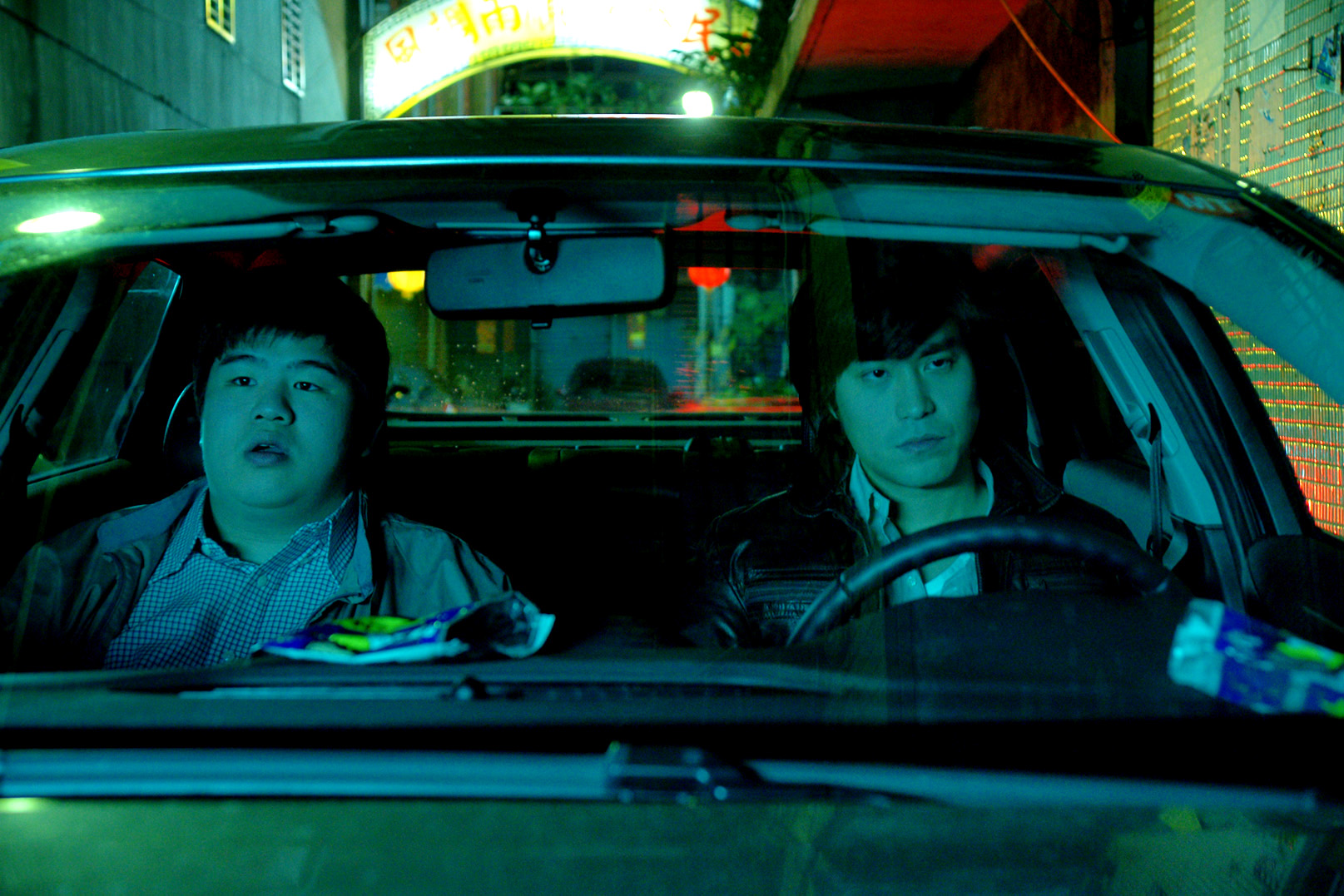
“Au Revoir Taipei” is light hearted goodness

Every now and again, it’s really nice to just see a simple, fun movie.  Enter Au Revoir Taipei. Continue reading

Sundance favorite”Winter’s Bone” Cuts Deep

There is an oft-lamented dearth of strong female characters in cinema.  Lt. Ripley and Sarah Connor are the characters that receive the most citation, but I’ll be damned if we can’t add Ree Dolly to the roster – this is not a girl to be trifled with. Continue reading

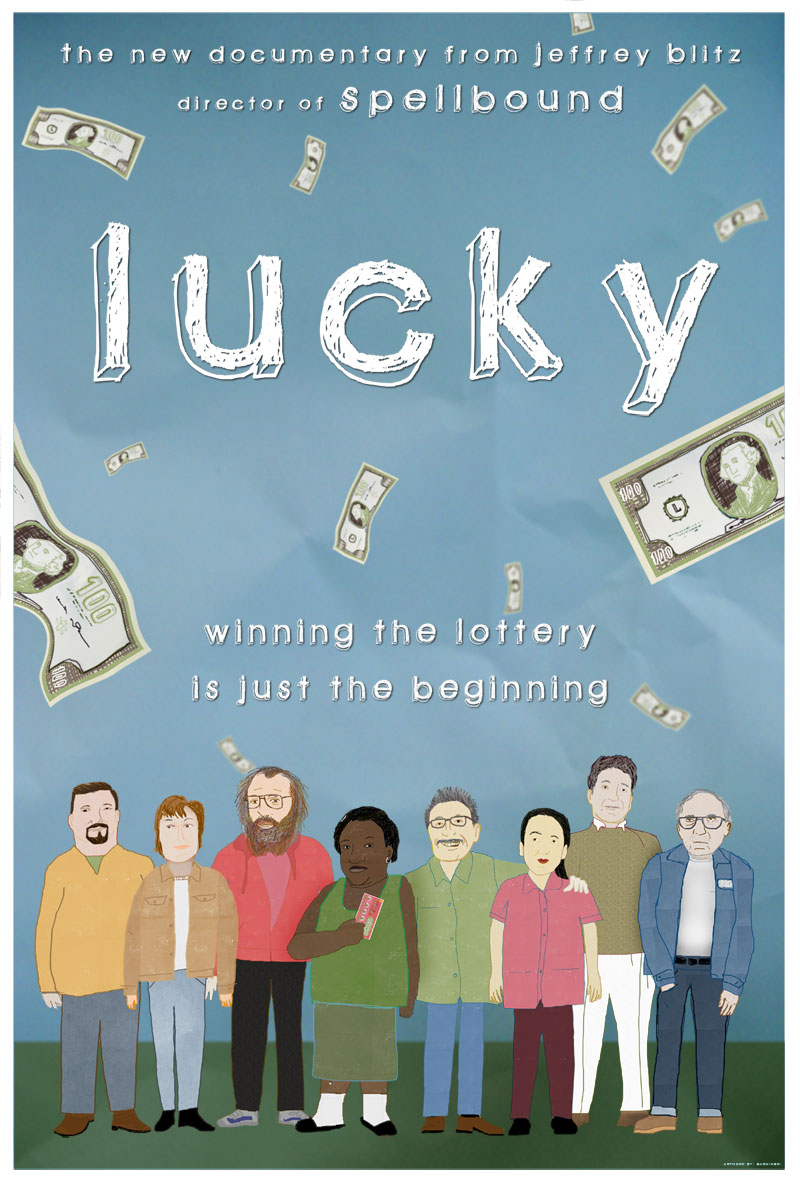
“Lucky” documents lottery winners, but not much else

“What would you buy if you had a million dollars?”  This is the type of hypothetical fantasizing we’ve all indulged in as children, but what if you actually won that million dollars?

Lucky follows the rare people who have won the lottery, varying from 5.5 to 22 million dollars in winnings.  The effects of fame and fortune are disclosed by the winners in interview format.  Some find it a curse they’re happy to spend until they’re again broke; others help their families or migrate to wealthier locales to fit in.

The general idea behind the film is immediately an attractive one: how do one of our fellow proles cope with becoming a part of the elite?  In a brief interview with a lottery player, he explains that he gambles so, “I can actually be free.”   Right there is a golden opportunity to explore our definition of “free” in a country that heralds itself as the uber-democracy and how capitalism and wealth play into that concept.

But director Jeffrey Blitz (Spellbound, Rocket Science)  doesn’t follow these breadcrumbs.  When former friends of lottery winners Kristine and Steve’s tell us they are envious of their bump up the class ladder, the film fails to dig in and ask why.  Why are we envious of the wealthy?  What does it mean to us to have money, to yearn for it?  Instead of providing an insightful document on the U.S.’s religion of greenbacks, it takes hunger for cash for granted.

Sure, we meet the guy who keeps a lid on his expenditures, except the stay cats he feeds every night and the stripper friends he visits; we even see the literal ruin of a man due to the cash (his siblings hired a hit man so they could acquire the wealth).  But Lucky doesn’t get the pick axe to the heart (so to speak) and leaves an aftertaste just slightly better than the Inside Edition clips it uses.

When a Vietnamese lottery winner’s wife stops the interview when it becomes too emotional, it stands in metaphorically for the film overall.  It could go deeper, but maybe it hurts too much.

“Monsters” leaves audiences in shock and awe

When you start watching films for a living, “You’ve Lost That Lovin’ Feelin'” becomes the haunting muzak filling the background of your consciousness.  Films quickly pile up in the mediocre category, with few hitting genius, or even atrocious levels.  When Monsters finished, however, I was covered with goose bumps and wanted nothing more than to sit quietly in the dark to mull it over. It is a film so powerful, fascinating and personal that it is a celluloid definition of why we go to the cinema.

Continue reading

My Sixth Sense is Tingling: Two Eyes Staring (Zwart Water)

Lisa and Peter go see what's hanging out in their basement.

From the haunted happenings of Poltergeist to Guillermo Del Toro’s excellent The Devil’s Backbone, children in film have been regular objects of ghostly terror.  Two Eyes Staring continues this tradition, with decent results.

Christine’s mother wills her a small mansion that her husband Peter loves, and her daughter Lisa loathes.  Peter convinces Christine to move in, but the house, and Christine’s past, are steeped in mystery by Christine’s evasive attitude concerning her mother.  As Lisa copes with the move and the subsequent loss of friends, she hears strange noises emanating from the basement.  Insert creepy music here.

Without spoiling the film, it does deliver fair horror atmosphere, with the accompanying jump scares that have become a staple of the genre.  The relationship between Lisa and Christine is deftly displayed as strained and cold, in comparison to how difficult it is not to smile at the warm relationship between father and daughter.  The mother is too interested in work, but dad’s affections come through in his respect  and familiar attitude.  The establishment of these cold and hot relationships supports the film’s final act – which delivers more than most horror tales.

However, the film’s length blunts its edge.  POSSIBLE SPOILER In an effort to firmly establish the reality which is then overturned, it spends laborious amounts of time hitting the same key.  SPOILER ALERT OVER In short: The length could have been trimmed to keep taut the flagging tension.  Further, the music crowds what could develop into deeper moments of terror; these items undermine the development of atmospheric and psychological creepies.  The Sixth Sense did an impressive job of generating  mystery, sustaining tension, and horrific scares sprinkled throughout. Two Eyes Staring is almost of that caliber, but not quite.

Even though the film makes some missteps, it’s by no means a bad ride.  It leaves you unsettled and your mouth agape with “Holy Sh*t!”-ness, which is more than most films are able to achieve.  Just give it some time.


Ginger Snaps Trilogy Roundup & The Problem of Genre Distinctions (part 4)

:read part 1, part 2, part 3:

Ginger Snaps: Complete Roundup

Though the final part of the Ginger Snaps trilogy is weak, it’s not Spider-Man 3 weak. Given the track record of horror film sequels, the entire trilogy stands up pretty well. The real strength of the series lies with the characters, specifically female lead characters. The male cast members are all supporting pieces to the story (though they play bigger parts in Ginger Snaps Back), so we get a fresh perspective as Brigitte and Ginger lead us through female territory: sisterhood, mother-daughter relationships, sex, menstruation, relationships with men, etc. Continue reading

Ginger Snaps Back: The Beginning (pt 3)

:catch Part 1 here and Part 2 here:

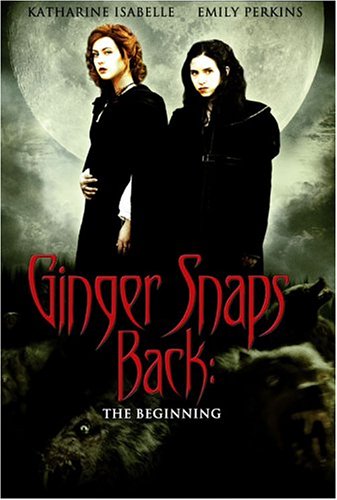
Now, about the third film.  Yes, Ginger Snaps Back: The Beginning is set in the 19th century.  Yes, that sounds very silly.  How in the hell have two girls dealing with werewolves in the modern era  suddenly found themselves stuck in the mid-1800’s fighting werewolves at a Canadian trade post?  The answer: there isn’t really one.  Toward the latter third of the film there are allusions to reincarnation and curses passed through families, but the film doesn’t force this idea and there aren’t any time travel shenanigans.  It just is.

So I’ll say this: if you had never seen the first two films and watched this one, it could stand on its own – which is respectable. Continue reading

Lost Gem: Ginger Snaps Unleashed (part 2)

:you can read part 1 here:

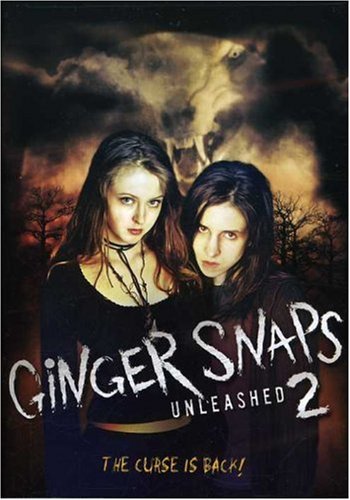
Trying to compare Ginger Snaps to Ginger Snaps Unleashed (released in the U.S. as Ginger Snaps 2: Unleashed) is like trying to decide between Alien or Aliens: they are both good, but different. Ginger Snaps Unleashed picks up where the first left off. And no, there are no silly gimmicks, there really is continuity between the two (even the same actresses return). Continue reading

Lost Gem: Ginger Snaps (part 1)

Teenage girls battling werewolves.  Nope, it’s not Twilight: it’s another horror gem like The Descent and Carriers.

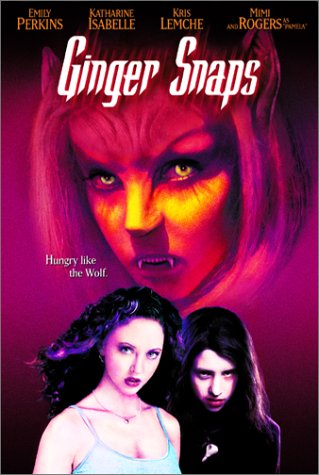
Katharine Isabelle as Ginger (left) and Emily Perkins as Brigitte (right)

While I was working at a video store, Ginger Snaps was just another straight to DVD horror film: attractive girl, catchy title, some ominous background music, BOOM, you have a cover just like all the other straight to DVD features (right next to Lord of the G-Strings and Santa’s Slay).  But as I’ve been working on my dissertation detailing “unsafe” horrors, Ginger Snaps came up enough times to merit a screening. Results?  The best werewolf film since Landis’ An American Werewolf in London. Continue reading

Erasing David

There are a variety of tools available to documentary filmmakers: Errol Morris used recreated events in The Thin Blue Line and Michael Moore is famous for “gotcha” style stunts.  The documentary Erasing David mines various documentary styles, but they can’t keep it afloat.

Directed and starring David Bond, the film follows David as he tries to evade private investigators (PIs) whom he has hired to track him down with his name as their only lead: the PIs have thirty days to find him.  David films himself during this period, verbalizing his concerns about being tracked when he uses his Blackberry or the internet.  We also follow the PIs as they obtain information on David through various methods: stealing garbage (twice), fraudulent phone calls, and obtaining a birth certificate (though it’s never explained how).

Erasing David takes place in the U.K. where, according to the film, millions of CCTV cameras make for the third-most surveillance-heavy state (coming in behind China and Russia). The idea of going off the grid is a pertinent one.  However, the film does not effectively deal with the deeper ramifications of electronic data.

SPOILER ALERT

There are multiple privacy experts that show up in the film, but they have little to say beyond “You’re at risk.”  We are never shown exactly how private information could be abused, other than showcasing two individuals who were wrongfully accused of crimes.

Further, in the film’s conclusion David reflects on the amount of information that’s available to the public about his life. The film then tries to link this commentary to David’s capture by the PIs after 18 days, implying that he was found via a vast web of information not kept private.

But that’s not what happened.

The only reason David is caught was because he gets sloppy and decides to visit his wife.  We’re not even sure how the PIs obtain the information that leads them to the couple’s meeting location (a hospital) other than one of the PIs pretended to be David over the phone.  That has nothing to do with electronic data or biometric scans–that’s just old-fashioned fraud.

Further, having a camera crew follow the PI’s as they try to find David undermines the paranoia and fear David exhibits as the days wear on.  When he talks to himself/the camera while out in the woods with the night vision on, we’re not afraid with him that the PIs are outside because we know where they are.  So because we know more than our main character, his fear and ramblings become comedic fodder, not dramatic gold.

These separate points of view also stymie any flow to the film, as we’re pushed and pulled from the present (“DAY TWO, HOURS ON THE RUN: 28”) to the past  (“FOUR WEEKS EARLIER”) so often that we don’t really care when and where we are – we just want to know why.

Some of the info we learn is interesting: an expert states that even though the U.K. has millions of cameras watching its citizens, these have no proven effect on crime.  Also, one of the best moments of the film is when David and his wife are talking about whether or not they’ll allow their child’s biometrics to be recorded.  David doesn’t want to do it because he’s worried his daughter could be persecuted based on data filed away somewhere (like the McCarthy trials, in which signatures from old Communist meetings were resurrected).  His wife, on the other hand, basically says if it becomes a problem, they’ll deal with it then.  Yeah, that worked really well for the ____________ (fill the blank with your minority of choice).

Though the documentary has an interesting subject, there are too many elements working against the film: several pieces feel staged (especially the segments with the PIs), the editing doesn’t keep the film focused, and the constant barrage of music fails to connect the audience to the film.

Though Michael Moore can be an asshole, he can keep you watching.  Erasing David, unfortunately, can’t bring home the sense of fear we should all have as we march into this brave new world.

*thanks to The Student for making this review possible.  You can read more film reviews at their website: http://www.studentnewspaper.org/film