Category Archives: Reviews

Avatar: “Totally racist, dude.”

After many years of leaving us to wallow in superhero films, James Cameron has returned with one of the most hyped films…well since Transformers 2.

After seeing trailers, stills, some clips and words from the director himself, you might be concerned that it might just be another bloated CGI wankfest ready to pick up the quick cash during the opening weekend and make way for the DVD.  Sure, Avatar does business just like the others, but it’s not as bad as Wolverine…but that’s not saying much.

Continue reading

Funny People: Quick Review

A lot has been made of this film, as it’s Judd Apatow’s third film, following his successes with 40 Year Old Virgin and Knocked Up, and there’s a lot worth praising. As usual with his work the film walks a fine line between being a comedy or a drama, leaning more for the emotional punches that just happen to be funny. Continue reading

Pontypool Review

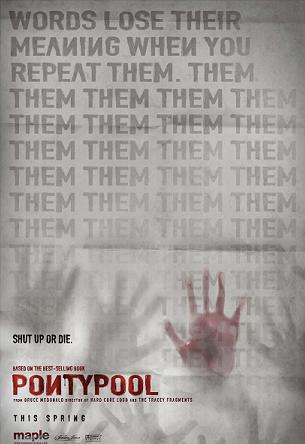
Teaser poster for <em>Pontypool</em>.

Teaser poster for Pontypool.

Since George A. Romero’s Night of the Living Dead, all of the great zombie films have provided us an undead lens through which a facet of human civilization is focused upon: Night of the Living Dead and Dawn of the Dead tackled race and conspicuous consumption, respectively; Danny Boyle used our fear of disease to look into the heart of man in 28 Days Later, only to find the “Rage Virus” within all of us. Pontypool continues in this vein as the best zombie* film since Boyle’s resurrection of the genre, utilizing the fear of the unknown to look at the power of language. Continue reading

Giallo Review

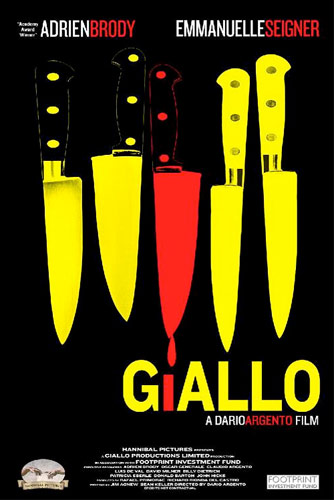
Poster for Dario Argento's latest film, <em>Giallo</em>

Poster for Dario Argento's latest film, Giallo

Dario argento has been playing the horror game for several decades, known by fans for his penchant for gore and his cult classic Suspiria. Argento pictures come with expectations.


The basic expectation of any director with the degrees of power and prestige afforded by such an audience following is that subsequent films will not be crap. Argento’s latest, Giallo, doesn’t succeed at being a serial-killer thriller, but earns watchability points for its campiness. Continue reading

Moon Review

With this intriguing trailer, a score by Clint Mansell (Pi, Requiem for a Dream, The Fountain), and Sam Rockwell starring as technician Sam Bell, I will admit to having some expectations. I would also say that most people intrigued by this film are going to be sci-fi nerds familiar with notable scif-fi movies.

Therein lies the problem with Moon: if you’ve seen Blade Runner, you’re just getting a rehash. Yes, the set design and CGI are great, especially when find out they did with a 5 million dollar budget. Clint Mansell’s score adds depth, tension, and excitement. Sam Rockwell playing two different characters: wonderful, he does a great job.

However the story falls flat after the first twenty minutes as you then predict the entire plot of the film and it doesn’t help that they reveal a major plot point in the trailer.

SPOILER ALERT (scroll down till you hit SPOILER ALERT OVER to read the conclusion)

Because after I saw the trailer I immediately predicted the film’s twists based on my knowledge of Blade Runner: Rockwell plays a clone created by a mining corporation who have implanted false memories of a life he’s never lived. The film further rides the Blade Runner band wagon when Sam looks sickly and starts coughing up blood… Surprise, surprise, the clones have a shelf life of three years!

The only part of the film in which you benefit from seeing previous sci-fi films is the send up to 2001: A Space Odyssey. During the film you wonder if the Kevin Spacey robot, Gerty, is going to be another whacked out HAL 9000: is he trying to hide the truth from Sam? Will he kill him for knowing too much? The filmmakers play with this expectation and is an upside for the film’s story. Since it is not the focus though, it still can’t make up for the Blade Runner fleecing.

And on a final spoiler note, the ending felt weak: as Sam Bell (at least one of them) is re-entering Earth’s atmosphere we hear radio broadcasts of his story being told.

One, the audience doesn’t really need to know if he got to Earth safely to feel good about the film. The fact that he escaped the Moon base at all is the payoff: he got free and there’s hope. So to clarify the point, and to do so with such casual briefness felt like both a disservice to the audience and the character.

SPOILER ALERT OVER

If you’re just getting into sci-fi movies, this is a great introduction. I will admit, even if you’re a veteran, it isn’t necessarily horrible either, as I mentioned the acting and technical achievements are evident. Just don’t expect any surprises.

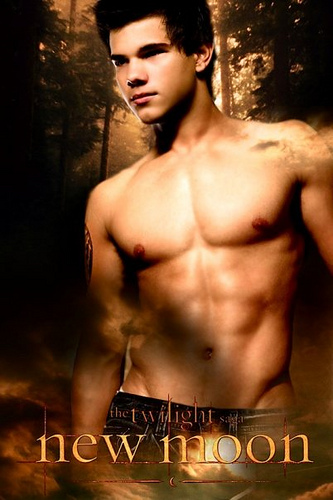
I looked for a Moon poster and this was all I got.  :shudder:

I looked for a Moon poster and this was all I got. :shudder:

The Hurt Locker

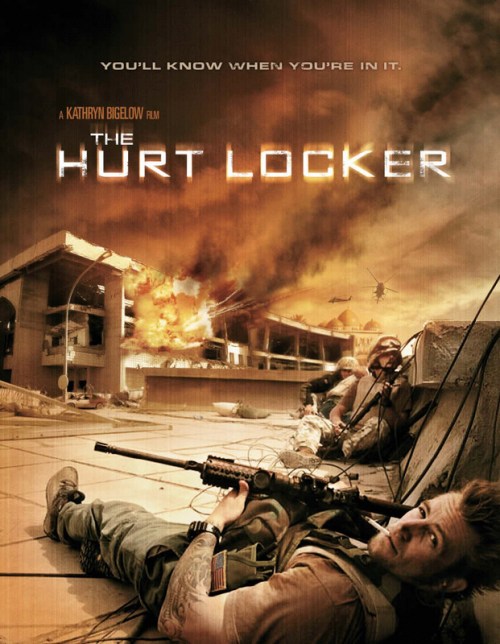
In the trailer I posted for Katheryn Bigelow’s latest film The Hurt Locker we see bomb suits, slow motion explosions, witty dialogue, and other cool, manly things.

This guy isn't even in the movie, but his tattoo, spiky hair, and the explosion in the background make it cool and MANLY

This guy isn't even in the movie, but his tattoo, spiky hair, and the explosion in the background make it cool and MANLY

The film, on the other hand, is not a glorification of war, but another attempt to humanize the men behind the guns.

The film follows a U.S. Army Explosive Ordinance Disposal unit serving in Iraq. When Sergeant JT Sanborn and Specialist Owen Eldridge get new boss Staff Sergeant William James, they pray to God, Allah, or Cthulu (we don’t know their religious beliefs) that they won’t be shredded by shrapnel thanks to James’ risk taking tactics.

The story is engaging, with IEDs being found, de-activated, and random appearances from Guy Pearce and Ralph Fiennes. Secured by ticking bombs, we are allowed to focus on Staff Sergeant James, whose bravado and badassery are matched only by the amount of emotional damage he takes.

The film opens with a quote from Chris Hedges saying that “War is a drug.” James is indeed such an addict, putting himself and his men at risk as he pushes his luck or goes looking for trouble. Sanborn and Eldridge can’t wait to go home; James can’t wait to leave it.

Though it’s a good cinematic tool to keep up the tension, Bigelow’s obsession with close-ups during the entire movie is frustrating. In theatre there is a purposeful awareness to how physically close a performance should be to the audience: if you get too close during a character’s emotional breakdown, the audience gets uncomfortable and the suspension of disbelief is broken. The Hurt Locker falls prey to this faux pas, forcing the audience to be way too close to everyone’s face. By the end of the movie you have a strange hunger for wide shots of the Grand Canyon.

Seriously.  Just a few of these would help.

Seriously. Just a few of these would help.

Other than this stylistic hurdle (worth mentioning after complaints I heard about the way Cloverfield was shot) it’s a great war movie due to its lack of battles between “good” and “bad” guys and the analysis of how war conditions the mind. Maybe we can learn from the Little Albert experiment and help them kick the habit.

EIFF: Away We Go

When you first see the trailer for Sam Mendes’ Away We Go you wonder if its going to be another Juno: trying so hard to be cute and funny that all you want to do is start kicking it around like a retarded puppy.
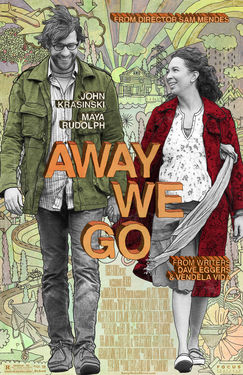
Even the poster makes you think of Juno

Even the poster makes you think of Juno

This sentiment is misplaced. What Mendes has done is encapsulate an earnest relationship and its struggle to define itself with a baby on the way.

We’re introduced to Burt (John Krasinski) and Verona (Maya Rudolph) when they first find out they’ll be having a baby. Six months later, the couple begins a location scouting adventure for HOME after Burt’s parents (the couple’s sole connection to their humble abode) decide to move to Antwerp a month before the child is to be born.

Written by Dave Eggers and his wife Vendela Vida, the film is true to its name, whisking us along from locale to locale in chapter format. At each location Burt and Verona meet up with friends or acquaintances who, as representatives of their city, repel or attract the couple.

Less of a “travelogue” and more of a sampling of various parenting styles (from dismissive apathy to New Age s’mothering), Burt and Verona learn what they don’t want to do (be in the same bed with their child when they have sex) and the type of parents they’d like to be (let their kids be who they want to be).

The writing is superb, giving the cast room to bring on the funny. John Krasinski plays Burt well, spinning between demure and heroic without stealing the show, and who knew Maya Rudolph could bring so much with so little? As the oldest sister who carries both child and questions of identity (“Are we fuck ups?” she asks Burt), Rudolph keeps the film’s gravitas.

Away We Go, in comparison to Mendes’ previous work, trades in the visual pomp for natural compositions that work specifically for the type of intimacy Mendes’ is reaching for. After Revolutionary Road, in which a couple tear each other a part by looking inward, Away We Go presents another answer to the equation of coupledom, as Burt and Verona, together, face outward.

This “togetherness” dynamic keeps the film from being casually tossed into the “Romantic Comedy” bin. The usual rom-com format is boy and girl are together, break up, boy fights for girl, wins her over, end. Burt and Verona are never led down that path of conflict (though Mendes’ track record does give you worry for the couple). Throughout most of the film Burt and Verona are always within the same shot, rarely separated by closeups, enhancing their united front.

The film is simple, but poignant, and will hit you where it counts. As my friend Ben Creech once highlighted, what really makes a film is the audience’s connection to the piece. I personally found myself presented on celluloid when Burt idly speculates, “But what if I’m walking by a construction site and I get hit on my frontal lobe and then I’m a horrible person?” When speculating upon the future our decisions may deliver, everyone has the “what if’s?”. The film’s response, “We’ll take it as it comes, together,” rounds out a mature, nuanced comedy about relationships and what it’s really going to take to stick it out. Evidently, it will take a lot of syrup.