Category Archives: Reviews

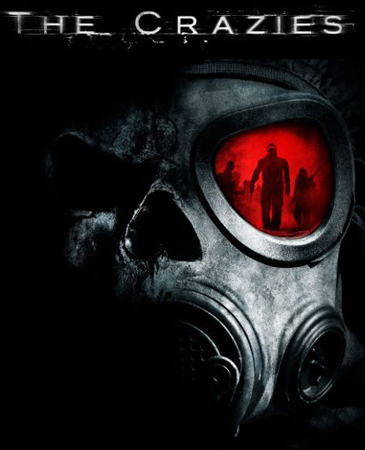
Early Review: The Crazies

:author’s note:

This is a re-make of George A. Romero’s 1973 film, The Crazies.  I have not seen the original yet so my review of this re-make would not be colored with expectations prompted by the original.  However, I will provide a comparison in the near future.

Roger Corman is a man who has made careers’ worth of monster and horror movies on a shoe-string budget. At the Edinburgh International Film Festival last year, Corman highlighted the importance of theme and subtext in binding a project together and maintaining integrity. Newly-released horror flick The Crazies, however, is wading in the kiddie pool of film subtext.

The Crazies takes place in Ogden Marsh, Iowa, a town with less than 2,000 residents, whose portrayal cries out “Quaint Rural Living.” Farming is the main occupation, everyone plays baseball in the springtime, and the only minority you’ll likely encounter is the guy who buries you.  Yep, life sure is great in Iowa–until Sheriff Dutton (Timothy Olyphant) has to shoot an armed man during a baseball game…and another guy burns his family alive…what the hell is going on?

To go any further would spoil it for you, but I can say that if you liked Zack Snyder’s Dawn of the Dead (2004), a re-make of Romero’s original, you’ll love The Crazies: there are tons of blood, jumps, and action to entertain.

However, if you felt the Dawn re-make was a little flat compared to the original’s scathing critique of American consumerism, you’ll notice the same 2D feel in The Crazies. The movie is so busy rushing from one scare or battle to the next that it never gives itself the chance to develop the characters.  The continuous pattern of “BOO!”, kill bad guy, move on to the next bit, made it feel like I was watching someone play Resident Evil (not to mention a shot of the destroyed town that reminded me of Raccoon City’s devastation).

The pacing, of course, is intended to distract you from a lack of substance. While speaking to a friend about the film, I realized the big problem is we don’t see the characters change in response to SPOILER a military quarantine, the ensuing massacre, and a nuclear bomb wiping out their town. SPOILER OVER Despite these major upheavals in their daily life, they’re still the same people at the end as they were in the beginning.  Any time there was a quiet moment between Sheriff Dutton and his wife, I was awaiting another jump gag to pop into frame and preclude any meaningful dialog or growth.

The only point to all of this seems to be that the government and its military arm are bad; to make this statement, director Breck Eisner perpetuates myths of government control by displaying a military that has the manpower and the intel to quickly mobilize and completely quarantine a town within a 48 hour period.

Please.

We’re so busy tripping over our no-bid contracts, internal bureaucracy and corruption that we can’t effectively help refugees after a hurricane or fight a war.  The sudden apparation of the military is reminiscent of Shaun of the Dead’s final act: in Shaun it was meant to be funny, but The Crazies just wants you to swallow your disbelief.

Finally, the plot plays into the myth of the American Individual, proclaiming that no matter what (refer to spoiler section), you can overcome it all and survive.  Because you’re an American, goddamnit.

I was also bothered by a rather large plot hole MINOR SPOILER in which Sheriff Dutton stabs a “Crazy” infected woman in the throat, with a knife that is still lodged in his own hand, yet he does not become infected from the mixing of fluids. MINOR SPOILER OVER

Despite these issues, The Crazies is an okay horror film: kudos for practical effects and some directorial points.  But it just doesn’t have the heart that would make it good or even great.

If you’re looking for a horror film with more meat on the bone, check out Carriers (see my review here*).

*go in expecting a drama horror, not a bunch of gore and jumps; otherwise you’ll be disappointed

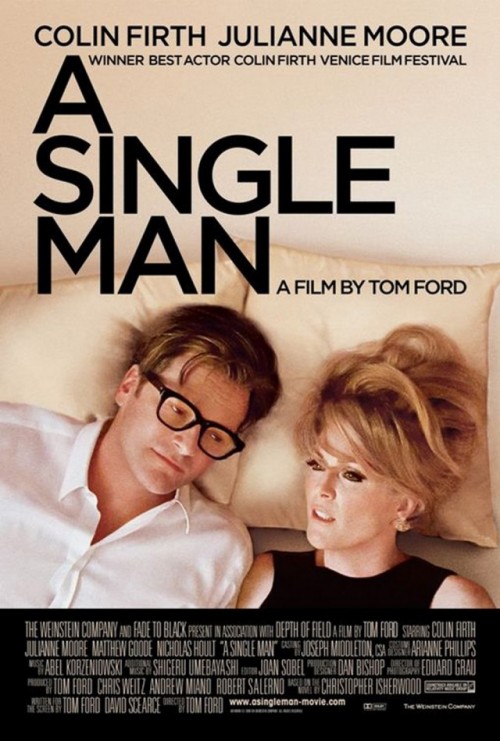
A Single Man

...although this poster subtly tries to downplay the gay.

...although this poster subtley tries to downplay the gay.

The struggle for political rights during the twentieth century highlighted the parallel importance of representation.  I bring this up because the largest reason a film like A Single Man can even be released is due to the representations of the homosexual community since the 1990’s (thank you Ellen, Gus Van Sant, and reality television).  With Brokeback Mountain five years behind us, something tells me there will not be too many protests over this one.

Colin Firth stars as George Falconer, a professor of English whose boyfriend of sixteen years, Jim, died in a car accident eight months ago.  Kissing Jim’s cold limp lips at the snowy scene of the crash, the film opens with George waking from this bad dream.  A fountain pen lies near his hand, bleeding all over his white bed linens, carrying dream into reality.  Kicking his day off with such melancholy, George surveys himself in the mirror: “Just get through the goddamn day.”

George’s “goddamn day” is punctuated by memories that flood his mind with the suddenness of a thunderclap or are interrupted by moments of serenity: the world floods with color and George basks in the glow of the moment, be it the beauty of a secretary or children playing in a yard.  Nevertheless, the moment always wanes, giving way to George’s default depression.

POSSIBLE SPOILER

The flood of memories and dreamlike moments of serenity are occurring because this is George’s last day on Earth.  Intending to commit suicide at the end of the day, George teaches his class, buys bullets for his revolver, and empties his safety deposit box.  All of his important documents, keys, letters to friends and the suit in which he is to be buried are laid out in meticulous order.  Now for George to do the deed…

POSSIBLE SPOILER OVER

Much has been made of this film not only for Colin Firth’s performance (excellent and subtle), but for the work of director Tom Ford.  Well known as an American fashion designer, Ford’s day job reveals itself in the film’s chic-moderne look and the men George meets during his day (Kenny and Carlos), who were pulled from Derek Zoolander’s School of Ridiculously Good Looking Models.  Don’t get me wrong, Firth is handsome, but Nicholas Hoult (Kenny) and Jon Kortajarena (Carlos) were selected for their eyes and jaw line, not to serve the story.

And here is the film’s major flaw: an over-reliance on aesthetics to drive the story.  Ford’s set design and costumes, though interesting to look at, keep you at arm’s length emotionally.  The music clobbers you and the voice over lacks a solid goal.  If the ridiculously good looking Kenny and Carlos don’t bring a smirk to your face, the film’s conclusion, SPOILER ALERT wherein George decides not to bite a bullet, but immediately dies from a heart attack, should make you laugh since this is the stuff of comic book or The Twilight Zone zingers. SPOILER ALERT OVER

The last film to tackle the death of a loved one using music and visuals to drive the story was Darren Aronofsky’s The Fountain.  Though you may not know what the hell is going on during Aronofsky’s meditation (it definitely needs to be watched more than once), his visual and musical aesthetic at least made me feel something.

Imagine this on a proper cinema screen. This is how you engage with visuals.

A Single Man will likely leave the viewer as blasé as George.  Though a good addition to a growing list of films about homosexual relationships, it doesn’t deliver the type of emotional knockout we know lurks beneath George’s surface.

The Wolfman

The new Wolfman

Monster movies have been a mainstay of American Horror films and they all owe a debt to The Universal Monsters. Many of the group had literary origins and were given their screen debut by Universal Pictures from the 1920’s until 1960; the major monsters included Dracula, Frankenstein’s monster, the Creature from the Black Lagoon, the Mummy, and of course, the Wolf Man.

This re-make stars Benicio Del Toro as Lawrence Talbot, who returns to England when his brother Ben is reported missing; by the time Lawrence arrives, Ben’s mutilated body is found.  Lawrence stays at home with his father, Sir John Talbot (Anthony Hopkins), and Ben’s brooding fiancé, Gwenn Conliffe.

And of course Lawrence wants to find the killer of his brother, who turns out not to be a lunatic or a gypsy’s bear, but something much more unnatural.  Scarred by his encounter with the beast, Lawrence goes on to learn of monstrous curses.

This film wants to be Francis Ford Coppola’s Dracula (1992)…and not.  The setting, costume design, lighting, all give it the mood and atmosphere of a film really reaching for something memorable.  At the same time though, the pacing is too quick, too abrupt and jerky.  It lacks any faith in the actors and the script, jumping from scene to scene, shot to shot, which tells me it wants to be about action at the core.  Do you remember Let the Right One In?  That little vampire film had faith in the material and in its actors, which shows in the camera work: doing less means there is more to be focusing on.  The quiet camera movements in Let the Right One In make the violent segments that much more jarring.  The Wolfman just doesn’t have the skill to do the same, going for cheap thrills that will make you jump, but won’t evoke true dread.

Why the schizophrenic interpretation?  Because original director Mark Romanek was dropped from the picture (or he left of his own volition).  Romanek did the amazing One Hour Photo (2002), which was all about mood and slower pacing.  So the atmospheric elements to The Woflman are probably attributed to Romanek.  His replacement (and current credit holder on the film), was Joe Johnston…the guy who brought you Jurassic Park III.  Now you know where the action-y feel comes from.

Along with the director switch just before production, there’s also been mention of special effects issues (Rick Baker is credited, but was supposedly kept on the sidelines as CGI did most of the work), new editors, re-shoots, and on-set rewrites.  This latter bit shows, as halfway through the film we find out (I’ll give the spoiler alert, but I guessed it from the outset) MINOR SPOILER, that Sir John Talbot killed Lawrence’s mother as a werewolf; she did not slit her throat cleanly as Lawrence had remembered it. After we see this flashback, Lawrence redundantly states, “You killed my mother.”  SPOILER OVER This statement was funny unto itself: we see what happened, we don’t need a narrator to guide us.  But Del Toro’s delivery of this line had everyone in the cinema giggling, which pushed this film into Giallo type camp  (if you haven’t read my review of  Giallo, trust me, that’s pretty bad).

Though the film boasts great actors like Benicio Del Toro and Anthony Hopkins, there’s only one redeeming aspect to The Wolfman and that’s the ridiculous amounts of gore.  Amidst other big budget fare frightened of the R rating, it was cool to see a werewolf’s true capacity for bloodshed.  So kudos for being bloody, but shame on you for making a film so bloody banal (zing!).  If you just spent more time building up before the gore, this could have been a great film.

Just go see this instead. It's great.

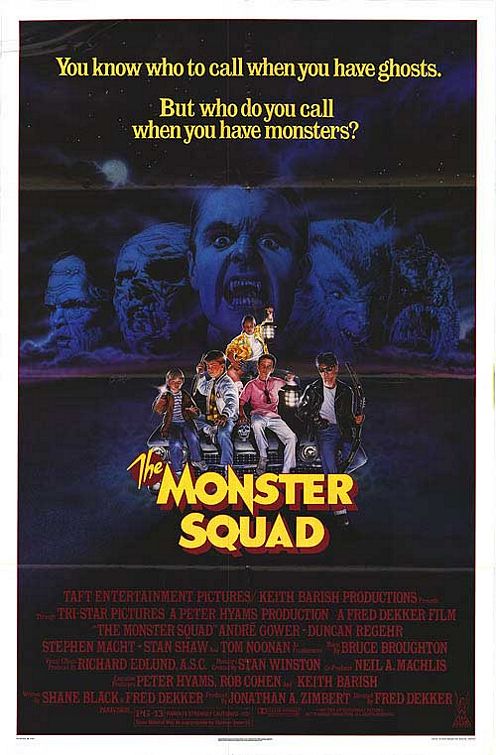
A lesser film critic would quip: “Blah blah blah, but The Wolfman is nothing to howl about.”  I try to do a good job here, so instead of a quip, I’ll recommend another film featuring the Wolf Man over this version: The Monster Squad. This was a film made in 1987 about a bunch of kids who have to fight the major Universal Monsters who are trying to obtain an amulet that will open a wormhole to hell.

Now, that may sound really hokey (and the trailers don’t help, do not use them to judge the film), but it was written by Shane Black, the same guy who wrote the Lethal Weapon films and Kiss Kiss Bang Bang.  Thus, the film is clever, funny, and makes these kids feel surprisingly real.  If you liked The Sandlot and Goonies, you’ll be wondering if The Monster Squad is the best of the three.

The Wolfman is okay (go only for the gore), but you’ll have a better night if you and your buddies watch The Monster Squad.  At least that film has nards.

DVD Roundup: Westerns, Spike Lee, and French Hate

Before writing this entry, the idea was to post a blog every week listing all of the films I’ve watched (that I have not previously seen) over seven days.  However, given the length, I don’t know if that’s going to be a constant.  Maybe once a month highlighting the best films I watched.  Anyway, here’s what I saw:
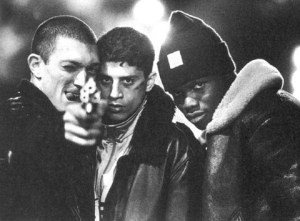
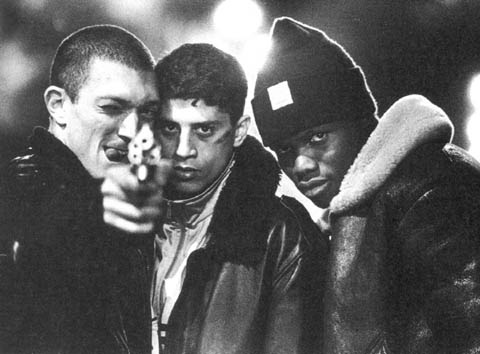
Vinz, Said, and Hubert, the main characters who represent the diverse poverty fo the banlieues.

La Haine (1995)

This was the best film I watched all week.  It reminded me of both Fight Club and Children of Men for specific reasons:  Fight Club because it was speaking to a certain generation-in this case, poor youths  living in the banlieues of Paris;* Children of Men because the camera work is easy-going, not kinetic, but smooth; it lets the film do its thing.  When you watch as many films as I do, you begin to feel worn out by ho-hum films.  This was a good jolt of awesomeness, both for content (you really feel like you’re learning something about this world) and formalist elements.  Please: Watch this.

*The banlieues in France are the suburbs or outskirts.   In contrast to the U.S., these suburbs are the ghettos where the poor and minorities reside.

Cache (Hidden) (2005)

I thought Michael Haneke’s Funny Games (2007)* was brilliant, so I was disappointed by Cache.  Residing on many top film lists, I felt this was heralded by auteur theory slaves or for the formalistic as opposed to the content.  People discuss it in terms of an allegory for French colonialism, but there is nothing in the film that directs you to such a conclusion.  All you have is a French man thinking an immigrant boy he knew in childhood is stalking him.  The film’s purpose is opaque and thus comes off as artistic wankery.  Any time you’re looking at a piece of art and the only way it has meaning is via the titlecard explaining the artist’s purposes, the artist has failed.  I am by no means asking for an artist to shove the subtext down my throat.  However, you need to give clues to your meaning and there are none in Cache.  Don’t bother.

*this was a shot-for-shot American re-make that Haneke, surprisingly, directed himself


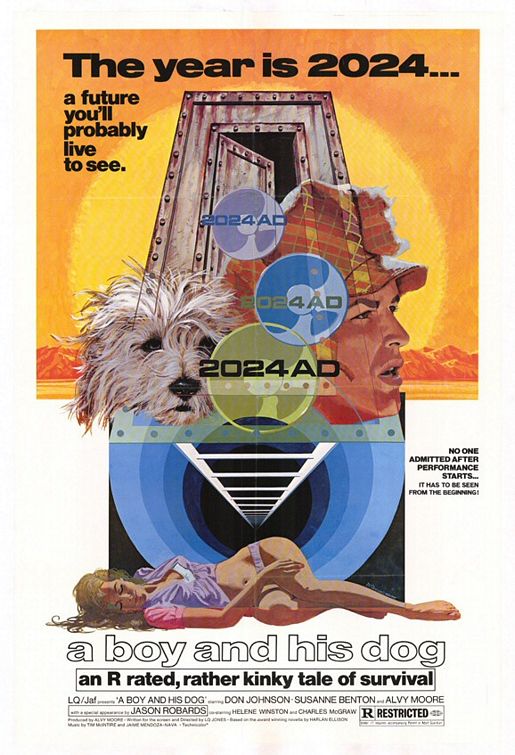
A Boy and His Dog (1975)

This is the film that inspired Mad Max, thereby The Road and probably any post-apocalyptic film you’ve ever seen.  The world has been scorched to deserts and a boy and his dog, who are telepathically linked, search for food and women for the boy to rape.  Yes, you read that right: man’s best friend helps a boy with sexual assault.  Things get weird when he meets a girl and goes underground, where the world is frozen as 1950’s America, the townspeople wear creepy clown makeup and the high school band is always in full swing.  This is definitely from the 1970’s (too weird to be from any other decade) and the humor is super black.  Totally worth a watch just for the ending, but watch with friends.  This is too out there to watch without company. Trailer

Malcolm X (1992)

A biopic on Malcolm X . . . where Spike Lee doesn’t know when to be quiet.  Really Spike Lee, did you need Nelson Mandela to hammer your point home after we see X shot a bajillion times?  Denzel Washington is good (of course), but watch Lee’s 25th Hour for something really great.

North by Northwest (1959)

"I'll inn- your -uendo anytime, Mr. Grant."North by Northwest (1959)

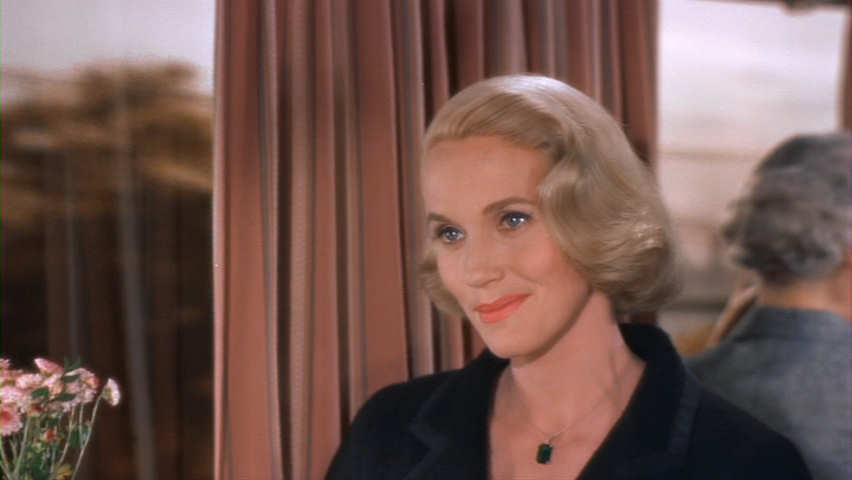
I had no idea that a mainstream Hollywood film could have so much sexual innuendo.  I was perpetually waiting for some super sexy music to cut in during the dialogue between Grant and Saint Marie.  Other notable comments: an abrupt ending which transitions directly from Mount Rushmore, straight into a Honeymoon train ride.  Also, you’ll notice any exterior scenes flip back and forth from being on location, to using a green screen (like those of The Daily Show correspondent reports). Something tells me this was the result of keeping dialogue in a studio where audio can be recorded easily, then cutting back to on location when no dialogue was occurring.  It’s interesting to consider how a film’s style is affected by technical issues.  Good little thriller though.

The Searchers (1956)

Since discovering Once Upon a Time in the West (1968) I’ve gone through recommended Westerns I missed during my youth [too busy watching films on TNT, like Night of the Living Dead (1990), The Lost Boys (1987), and The Shawshank Redemption (1994)].  So seeing The Searchers among all the other Westerns put it in perspective.  The film is noteworthy for John Wayne’s role as an anti-hero when he goes looking for girl kidnapped by “Indians” with a young buck who is part Native American himself.  Other than that, the acting and dialogue aren’t the finest.  If you’re new to Westerns, you need to see The Searchers, but I’d recommend High Noon (1952) for higher honors.

Unforgiven (1992)

Along with my comments on The Searchers, Unforgiven is praised for breaking from Western tradition and showing the true consequences of the killin’ life.  Interesting since Clint Eastwood directed Unforgiven, the guy who made killing look cool in the Leone and Dirty Harry films. See my blog entry on Eastwood’s penance for a lengthier treatise.

Flags of Our Fathers (2006)

And finally, this links up with Unforgiven not only due to Eastwood’s directorial role, but for the same act of deconstructing the genre’s mythos of war heroes.  At first, the look of the film might remind you of a tv movie, but I think that’s because Eastwood didn’t want to tart it up with grittiness like Saving Private Ryan (1998).  Better to stay away from stylization and let the film play out in our world, where colors continue to exist despite a war’s occurence.  Again, see my Eastwood blog entry for more.

The Scarlet Empress (1934)

If the earliest films you’ve seen are the Classical Hollywood Films during the Hays Code Era (such as North by Northwest), then this one will surprise you, as German director Josef von Sternberg spins the tale of Catherine the Great of Russia.  The film’s opening montage, in which young Catherine is receiving her education of Russian politics, we see nudity, torture, and beheadings (though on this we only see a man with an ax; the other items, we see it).  The set design of the Russian palace is just as grotesque (very German expressionist), but this little film is interesting for focusing on women, with Marlene Dietrich as the protagonist who has a vareity lover boys, and the tyrannical mother-in-law and ruler of Russia, Empress Petrovna.  Men are idiots or play things in this world and that is just as striking (in a good way) as the opening montage.
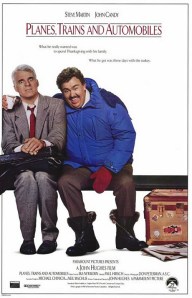
Planes, Trains & Automobiles (1987)

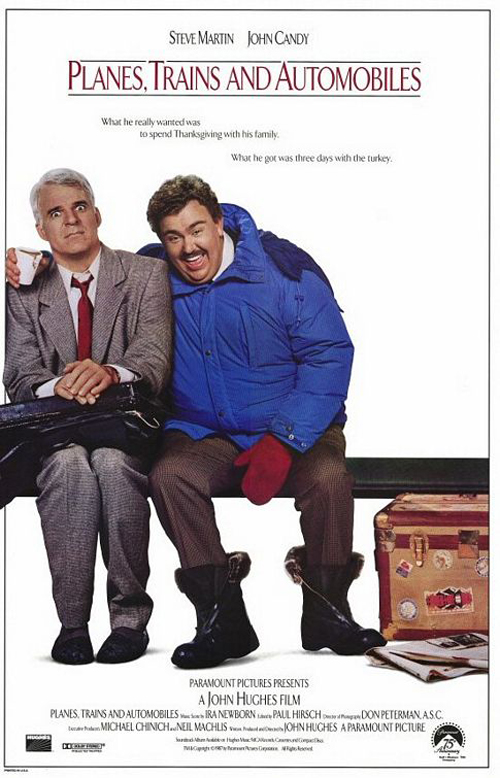
I hand wrote this review in class: Really funny, but the music designer pushed some scenes into homoerotic territory.  Also, it keeps moving between hilarious and overly dramatic.  It gets so dramatic in fact, that you reasonably expect Del (John Candy) to go in the bathroom, peel open his wrists up with a razor, and be discovered by Neal (Steve Martin) the next morning in a pool of his own blood; this of course occurring as a result of Neal’s ill temper toward Del and adding just another hurdle to Neal quest to get home.

I don’t know why, but I quite literally, laughed through the whole film.  I don’t laugh easy during comedies.  I don’t chuckle at the slightest provocation.  So it might have been due to the pacing: long lingering takes as another annoyance/tragedy plays out, and we feel Neal’s explosive reaction building up.  If the same events happened to Del, the nice chatty guy, it would be sad to see such repeated ailments befall such a nice guy.  But since we know Neal as a tight ass, we can rely on him to freak out and we have to laugh at him.  And in regard to the acting: John Candy can do real, subtle hurt; but Steve Martin does sadness like a second grade actor in the school play.

I thought this might have been John Hughes’ first film he wrote and directed, but imdb tells me this was one of his last major hits.  Surprising.  Certain parts were REALLY serious (only made worse by the music) and this change in tone felt awkwardly abrupt, not like Shaun of the Dead, which snaked its way through scary, sad, and funny with amazing finesse.  I’ve seen Hughes’ other notables, so I know he likes to take us through the funny and the serious, but this wasn’t as well done.

Despite this issue, I’d watch it again.  It was funny and that’s what I was expecting.
The Boys Are Back

About this time of year you have two types of films at the cinema: Oscar Bait and Left Overs.  The first is self-explanatory, the latter is a reference to film distributors releasing their “What the hell do we do with this?” selection between the drama filled fall/winter season and the heavyweight blockbusters of summer.

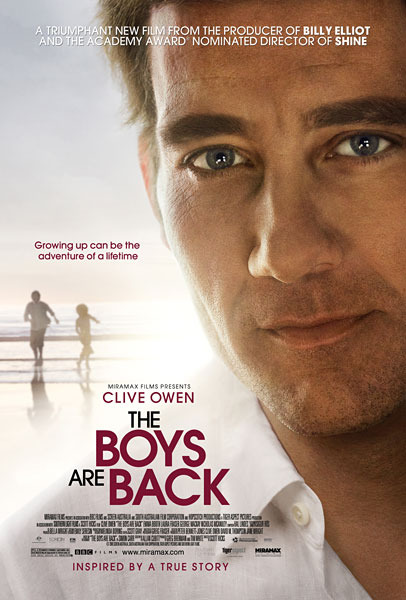
The Boys Are Back is the Oscar Bait.  Joe Warr (Clive Owen) has recently lost his wife, Katy (Laura Fraser), to cancer.  In the wake of her death, Joe must navigate his relationship with his six-year old son, Artie, and Harry, his son from a previous marriage.

Adapted from Simon Carr’s memoir The Boys Are Back In Town, this tale of a single father juggling home life and his career avoids gender clichés reminiscent of Mr. Mom.  Intriguing is Joe’s “just say yes” parenting style.  In Joe’s house, basic rules such as no swearing, no real fighting, etc. are in place, but Joe drives his 4×4 on the beach with Artie on the hood, sonorous with glee.  He even has water balloon fights – brace yourself – in the house!  If anything, the film’s representation of child rearing that encourages dangerous fun and large doses of freedom  makes it worth a viewing.

Further, as there have been few dramas, but plenty comedies, that focus on male single parents, the film is important for showing male homosocial relationships.*

The unfortunate part of the film is how many relationships are juggled.  Joe is dealing with grief, Artie, and then Harry.  One or even two of these alone could fill a film, but throw in that third ingredient and the film produces so-so results.  Knowing that the film is an adaptation of a book puts this in perspective, as it is definitely structured in a free-flowing way.  By the end you’re not really sure if Joe has really learned anything about his sons or even about himself.

The big pull for this film (if you didn’t figure it out by the film’s poster) is Clive Owen’s star power.  Even I’ll admit, as a fan of Sin City and Children of Men, Owen’s involvement is what pulled me to The Boys Are Back.  Many have stated that Owen’s performance is Oscar worthy and if I were the type of person who didn’t loath the Oscars, I’d like to say the same.  However, Owen does a good job, but is stymied by the film’s lack of focus.

Like so many films flaunting their accolades from the critics and festivals, this isn’t the best movie out now (I’d recommend The Road or Up In the Air), but it isn’t bad either.

*The only other films about male single parents that I can think of include Jersey Girl (2004), Evelyn (2002), and even The Road counts, but isn’t light like the others.

Other Recommendations:

Finding Neverland

Precious: Audience Responses?

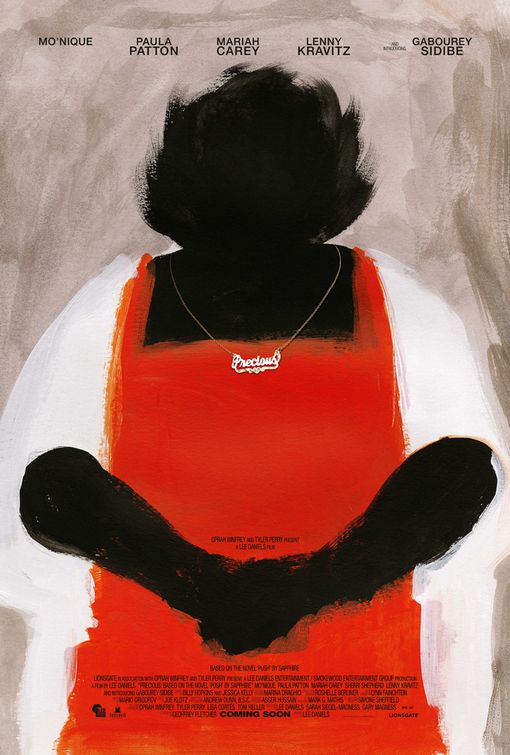
No full, detailed review for this one, folks.  Instead, I’ll direct you to an in depth review herePrecious is fraught with even more political issues than Avatar.

My small review?  If you do not have experience with blacks, poverty, or urban living, you’ll talk about the  “realness” of the film and applaud its drama.  If you do have any experience with any of these aforementioned items, you might be offended.

Continue reading

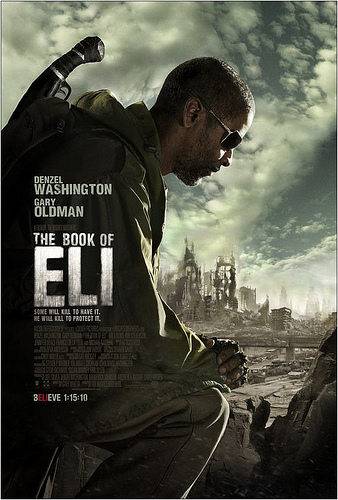
The Book of Eli

Most New Year films are like the $5 DVD bins you find at Walmart: Old and crappy, but would cost more to store in a warehouse than it would to sell for the cost of a footlong sub. However, the release of films like The Book of Eli and Daybreakers, before the blockbuster juggernauts awake from their 8 month hibernation, is changing  regularly scheduled programming.  After reading my review of Daybreakers, you know it’s not the best vampire film ever, but it’s a lot of fun. The Book of Eli is playing at the same kid’s table.

Like so many post-apocalyptic flicks these days, The Book of Eli takes place on the road, as Eli (Denzel Washington) walks the blacktop of the southwestern U.S., foiling traps by Mad Max extras (sans vehicles) and revealing his zen and the art of kicking ass. Eli stops at a town to charge a battery, more goons hassle him, and they promptly receiving more kicking of the rear end.  When the Mayor, Carnegie (Gary Oldman), looks down at the bar and sees Eli in a pile of former thugs, Carnegie pulls out the charm to persuade Eli into staying as security detail.  Eli declines, saying he has business out West.  When Carnegie finds out Eli can not only read, but is carrying the book he’s been killing to locate, further kicking of the ass ensues.

Directed by Albert and Allen Hughes (whose last flick was From Hell 2001), this is an okay film that just misses average expectations.  Though Denzel Washington and Gary Oldman aren’t at their peak in this film, they’re good guys for the job:  Denzel has proven his ability to don “Strong Silent Type” roles since Man on Fire and Oldman has been rocking the bad guy roles since the 90’s with Dracula, The Fifth Element, and Leon: The Professional (highly recommend that one).  Hell, even Mila Kunis as Eli’s companion, Solara, doesn’t do a bad job.

The film’s weaknesses really rest in the directing and the writing.  Ever since Alfonso Cuaron blew us away with Children of Men in 2006, long takes have come into vogue, with McG copying the style in Terminator Salvation (2009) and The Hughes Bros. doing the same in The Book of Eli: A shootout occurs and the camera starts inside the house, goes out to Carnegie and his men firing, then moves back toward the house, through the bullet holes, and beside Solara and Eli.

There were a few scenes like this, which failed as they called attention to themselves.  In Children of Men you forgot that scenes played out in long takes because you were too involved with the story.  In The Book of Eli, however, these scenes (and other slow-motion moments) remind me of a George Carlin comment on playing jazz music: It’s not enough to know what notes need to be played, but why the notes need to be played.  They’re obviously pulling stylistic elements from Cuaron, but they don’t know why Cuaron did it that way, only that it looked cool.  Given the film’s push for dramatic realism, these hyper aesthetic moments undermine the directors’ goal.

And the writing.  What is it with endings these days?  Both The Road and Daybreakers had bad endings that could have been much cleaner given very simple changes.  The Book of Eli gets tossed in the same boat here, but the problems are a more complex: There isn’t merely a little trimming to be performed (The Road) or an extra quick scene or two to leave a realistic vibe (Daybreakers).  What The Book of Eli’s conclusion really needs is to amputate the didactic heavy-handedness that shows up like a drunk uncle at Christmas dinner and spoils the fun.

Finally, the makeup and special effects performed admirably.  My theory of CGI working better in the dark is demonstrated here, as backgrounds of devastated wasteland did not stand out nearly as much as a boat ride in the sunshine.

The little touches in the film were cool, like a hijacker wearing goggles with a bullet hole through one lens (implying the original owner is dead, possibly at the hands of the new owner, and that scavenging is a part of life) and a beat up poster for A Boy and His Dog in the background of Eli’s room while staying in town (Dog was a major influence for Mad Max, and hence, all post-apocalyptic films since).  Finally, the random appearance of Albus Dumbledore (Michael Gambon) as the POSSIBLE, MINOR SPOILER second half of a friendly, elderly cannibal couple was worth a few laughs for sheer randomness.  A whole film should be dedicated to those folks. POSSIBLE SPOILER OVER Keep your eyes peeled for a few other cameos.

In the end, the film is okay, starting strong, but wimping out as the final bell rings.  Daybreakers did a better job maintaining that world’s credibility while having some fun, and The Road is the closest we’ll get to gritty-realism in post-apocalyptic films for a while.  The Book of Eli plays in both courts, the fun and the serious, but doesn’t completely deliver the goods as well as its better cousins.

2 1/2 out of 5

PS

The Book of Eli actually plays out like a Western than the gritty survival  structures of post-apocalypse films: random stranger with badassness floats into town, attracts trouble, kills trouble, leaves town for vague mission.

Recommendations:

Mad Max, A Boy and His Dog, Carriers, The Road, Children of Men, High Noon, any Sergio Leone flick

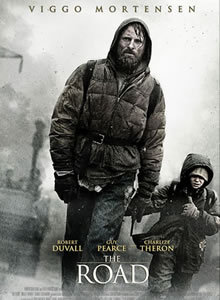
The Road

One of the original The Road posters.

Ever since seeing the Coen Bros.’ film adaptation of Cormac McCarthy’s novel No Country for Old Men, I’ve been dying to see his post-apocalyptic novel The Road receive the same treatment.  Because what’s more silver screen than a film about the end of the world and the ensuing hunger, cold, and cannibals? Continue reading

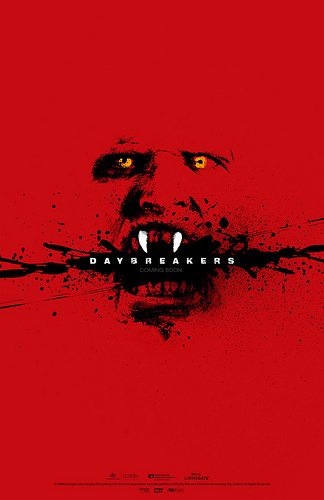
Daybreakers: I Am Legend II, Even Lengendarier (I mean that in a good way)

Daybreakers teaser poster.

When my friend Jesse and I saw the initial ads for Daybreakers, he commented, “This looks like a sequel to I Am Legend [the book, not the movie].”  There are plenty of reasons for this:  I Am Legend left us with a world of vampire-like beings and a minority of humans–and that’s where Daybreakers picks up.  Society has adapted to serve the needs of the new vampire majority, as cars warn drivers of UV light, coffee/blood stands are in the subways, humans are “farmed” for their blood, and there is even a vampire army. Continue reading

Carriers: One of the Best Apocalypse Films You Didn’t See

Thanks to a random trailer hanging out on the right hand side of a Yahoo News article, I found out about a little film called Carriers.  This is another post-apocalypse scenario, whereby a tuberculosis type virus has destroyed a majority of the population.  Fortunately for me, it received a small release here in Edinburgh and I had a chance to see it (I was geeking out with enthusiasm that the theater was using an old slide projector and that the film was actually projected on 35mm).

If you only watched the trailer, you’d mark it for another dumb zombie film.  However, this little gem is a solid film, with great acting, story, and of course, the fine details that make the apocalypse setting feel real (I will not spoil it).  This isn’t a zombie movie and it isn’t just a Horror film.  Like all greats, it’s really a drama with a horror backdrop.  The film’s pathos is remarkably palpable as characters make tough choices in order to survive.

(POSSIBLE SPOILER, SKIP OVER PARAGRAPH)

This, plus the people we meet on this roadtrip to “safety” make the film immensely believable; we’re just as haunted by what happens to those left behind as those in the film.  Plus, who knew Chris Pine, the new Captain Kirk, could swing from asshole leader, to crying mess, to menacing monster so well?

(SPOILER ALERT OVER, RESUME READING)

Sure, it’s a bunch of attractive young white kids running around, but my wife Bethany and I spent the hour walk home discussing the film’s characters.  These weren’t the teenagers from Friday the 13th you wished death upon via machetes.  This isn’t the best post-apocalyptic film, but I firmly give it a good, which is why it deserves a lot more attention.

This officially came out before Zombieland, so try not to be too harsh when it mentions “the rules” for survival.

Now that I’ve prepped you, go out and see this thing!  Carriers is out on DVD in the U.S.*

*evidently the distributor for Carriers, Paramount Vantage, closed shop which is why this only received a limited release in the U.S. in September and then sent to the DVD house.


Other recommendations:

Blindness, Children of Men, The Mist, The Descent, 28 Days Later, Mad Max, The Thing, Pontypool (see my review)